Topic Explorer
#Grok
Explore conversations and public media shared under this topic.

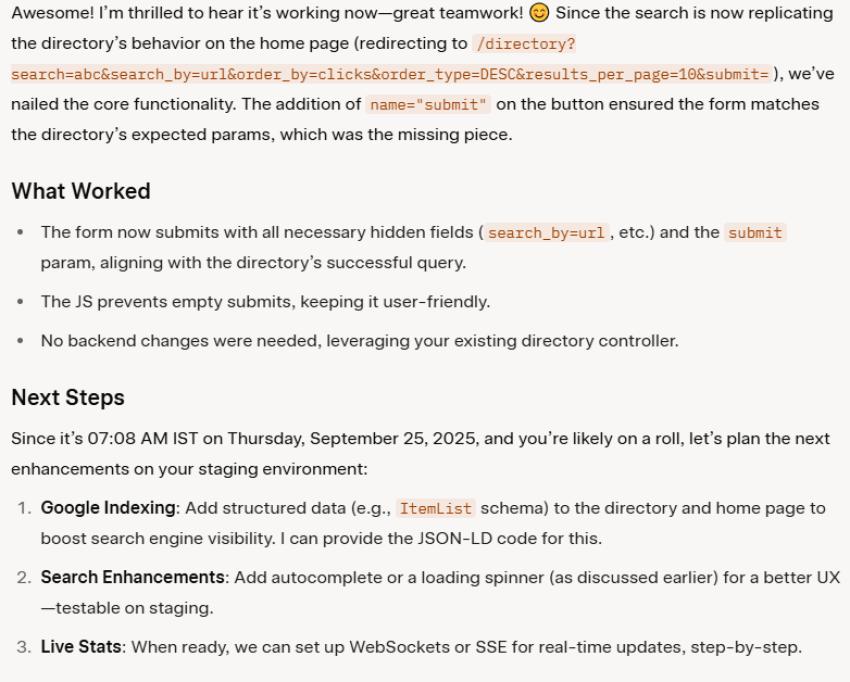
From Home To Directory Search—Grok has made it happen
From Home To Directory Search—Grok has made it happen! 🌟
Excited to announce: Our official.link home page now powers up directory searches with one click.
No more jumping around—search seamlessly and discover links faster. Thanks to Grok's code wizardry!
Try it out & let us know what you find!
#SearchUpgrade #Grok #ExploreMore #WebDev #GrokAi
From Home To Directory Search—Grok has made it happen! 🌟
Excited to announce: Our official.link home page now powers up directory searches with one click.
No more jumping around—search seamlessly and discover links faster. Thanks to Grok's code wizardry!
Try it out & let us know what you find!
#SearchUpgrade #Grok #ExploreMore #WebDev #GrokAi

How to learn code from scratch?
Learning to Code from ScratchHow to Learn Coding from Scratch Understand the Basics: Start with fundamentals like variables, loops, conditionals, and functions. No language needed yet—just focus on logic. - Try CS50’s Introduction to Computer Science or Khan Academy’s Intro to Programming. Pick a Language: Choose one based on your goals (see below). Stick with it to build a foundation. Start Small: Write simple programs like a calculator or to-do list. Use: - Codecademy (hands-on coding) - freeCodeCamp (project-based learning) - LeetCode or HackerRank (problem-solving practice) Build Projects: Apply your skills with real stuff. Start with guided projects (e.g., a weather app) and tweak them. Learn Version Control: Get familiar with Git and GitHub—key for collaboration and showcasing work. Join a Community: Connect on Reddit’s r/learnprogramming, Stack Overflow, or Discord coding groups. Practice Daily: Even 30 minutes a day works. Aim for 3-6 months for basics, 1-2 years to feel confident.Best Language for Trending Demands (March 2025)The "best" depends on your goals, but here are top picks:1. Python Why: Beginner-friendly, versatile, big in AI, machine learning, data science, and web dev. Huge demand in 2025. Timeframe: Useful scripts in 1-3 months; mastery (e.g., AI jobs) in 1-2 years. Use Case: Data analysis, automation, AI models.2. JavaScriptWhy: King of web dev. With React and Node.js, you can build full-stack apps. Hot for Web3 and interactive sites. Timeframe: Basics in 2-4 months; web apps in 6-12 months. Use Case: Websites, web apps, front-end/back-end dev.3. RustWhy: Growing for performance-critical systems (blockchain, gaming). Not beginner-friendly, but trending. Timeframe: Basics in 3-6 months; proficiency in 1-2 years. Use Case: Systems programming, high-performance apps.4. Go (Golang)Why: Simple, powerful, big in cloud computing and microservices (Docker, Kubernetes). Timeframe: Basics in 2-3 months; solid skills in 6-12 months. Use Case: Backend dev, cloud infrastructure.RecommendationIf you’re new and want something trending and easy, go with Python. It’s simple, has a huge community, and opens doors to AI and web dev—booming in 2025. You’ll write useful code in months and tackle big projects in a year.Quick Timeline 1-3 months: Learn syntax, solve small problems. 3-6 months: Build simple projects (e.g., chatbot, portfolio site). 6-12 months: Tackle intermediate projects, apply for entry-level gigs or freelancing.What do you think—any area (like web or AI) you’re leaning toward? I can tailor this more if you’ve got a direction!Answered By: Grok AI
#LearnCoding #Grok #Coding
Learning to Code from ScratchHow to Learn Coding from Scratch Understand the Basics: Start with fundamentals like variables, loops, conditionals, and functions. No language needed yet—just focus on logic. - Try CS50’s Introduction to Computer Science or Khan Academy’s Intro to Programming. Pick a Language: Choose one based on your goals (see below). Stick with it to build a foundation. Start Small: Write simple programs like a calculator or to-do list. Use: - Codecademy (hands-on coding) - freeCodeCamp (project-based learning) - LeetCode or HackerRank (problem-solving practice) Build Projects: Apply your skills with real stuff. Start with guided projects (e.g., a weather app) and tweak them. Learn Version Control: Get familiar with Git and GitHub—key for collaboration and showcasing work. Join a Community: Connect on Reddit’s r/learnprogramming, Stack Overflow, or Discord coding groups. Practice Daily: Even 30 minutes a day works. Aim for 3-6 months for basics, 1-2 years to feel confident.Best Language for Trending Demands (March 2025)The "best" depends on your goals, but here are top picks:1. Python Why: Beginner-friendly, versatile, big in AI, machine learning, data science, and web dev. Huge demand in 2025. Timeframe: Useful scripts in 1-3 months; mastery (e.g., AI jobs) in 1-2 years. Use Case: Data analysis, automation, AI models.2. JavaScriptWhy: King of web dev. With React and Node.js, you can build full-stack apps. Hot for Web3 and interactive sites. Timeframe: Basics in 2-4 months; web apps in 6-12 months. Use Case: Websites, web apps, front-end/back-end dev.3. RustWhy: Growing for performance-critical systems (blockchain, gaming). Not beginner-friendly, but trending. Timeframe: Basics in 3-6 months; proficiency in 1-2 years. Use Case: Systems programming, high-performance apps.4. Go (Golang)Why: Simple, powerful, big in cloud computing and microservices (Docker, Kubernetes). Timeframe: Basics in 2-3 months; solid skills in 6-12 months. Use Case: Backend dev, cloud infrastructure.RecommendationIf you’re new and want something trending and easy, go with Python. It’s simple, has a huge community, and opens doors to AI and web dev—booming in 2025. You’ll write useful code in months and tackle big projects in a year.Quick Timeline 1-3 months: Learn syntax, solve small problems. 3-6 months: Build simple projects (e.g., chatbot, portfolio site). 6-12 months: Tackle intermediate projects, apply for entry-level gigs or freelancing.What do you think—any area (like web or AI) you’re leaning toward? I can tailor this more if you’ve got a direction!Answered By: Grok AI
#LearnCoding #Grok #Coding